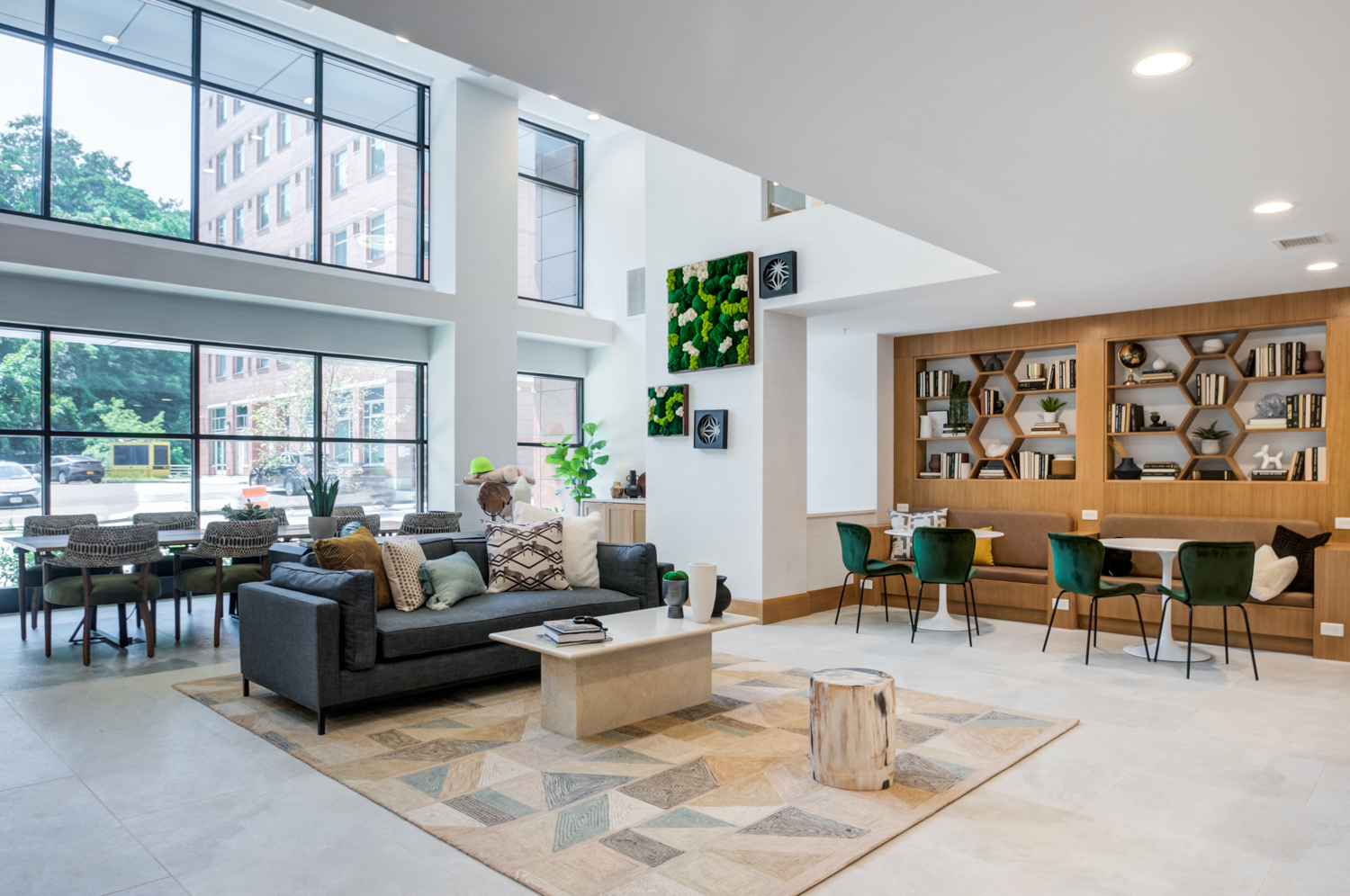
The Gist: This article by Emily Hiott, published on May 30th, 2023, provides actionable insights into essential design features for creating effective community clubhouses in student housing to foster socialization, support academic activities, and enhance student well-being.
What you’ll learn
You will learn about crucial elements for designing a successful student housing clubhouse, such as flexible furniture, gaming zones, necessary technology, study spaces, snack stations, outdoor areas, and security measures that enhance both social and academic experiences.
After reading, you’ll be ready to
Understand and implement effective strategies to design a community-driven student housing clubhouse that supports academic goals while promoting social interaction and ensuring the safety and comfort of students.
Talking points
Key clubhouse features include adaptable seating, entertainment options, technological support, study spaces, snack availability, outdoor facilities, and robust security, all designed to enhance student life and foster community connections in student housing environments.
7 Must-Haves for a Community Clubhouse (Apartment and Student Housing)
The Gist: This guide covers seven features that make an apartment or student community clubhouse work, framed for the developers and property managers who fund them. A well-designed clubhouse is a leasing and retention asset, and the details below show where the investment pays off.
For a developer or property manager, the community clubhouse is one of the highest-leverage spaces in the building. It drives leasing velocity, keeps residents renewing, and gives a property a clear point of difference in a crowded market. Prospective residents tour the clubhouse and picture their life there, so the space does a large share of the selling before a lease is ever signed.
That logic holds across multi-family communities and student housing alike. The residents differ, but the goal is the same: a clubhouse that anchors community life and earns its cost through occupancy and retention. Here are the seven features that get it there.
Why the community clubhouse matters for multifamily and student communities
Amenities are one of the strongest levers a property has for preventing tenant turnover. A clubhouse gives residents a reason to stay: a place to work, gather, and feel part of something, without leaving home. That sense of belonging translates directly into renewals, and renewals protect net operating income far more efficiently than chasing new leases.
The clubhouse also does the heavy lifting on differentiation. When two communities compete on price and floor plans, the one with a clubhouse that feels considered and current wins the tour. For apartment communities that means productivity and social space for a working, remote-friendly resident base. For student communities it means a hub for studying, socializing, and downtime between classes. In both cases the clubhouse is the room that makes the community feel like more than a set of units.
1. Flexible seating and furniture
Good seating is what makes a clubhouse usable. Modular pieces, including chairs, ottomans, and tables, let residents rearrange the space for whatever they need, from a quiet afternoon to a full community event. Tables with built-in charging keep devices powered for a work session or a study group.
Furniture here has to meet three standards at once: comfort, flexibility, and durability. Comfortable pieces get used, flexible pieces serve more than one purpose, and durable pieces survive heavy daily traffic while still looking new. That balance is exactly what specifying commercial-grade furniture is built to solve, and it is where thoughtful selection separates a clubhouse that ages well from one that looks tired in a year.
2. Gaming and entertainment areas
A dedicated entertainment zone gives residents a reason to leave their units and use the shared space. Video game stations, pool and foosball tables, air hockey, darts, board games, oversized versions of classics like Jenga or chess, and a music system all pull people into the room and keep them there.
The payoff is social. Entertainment options create the casual, repeated encounters that turn neighbors into a community, which is the same dynamic that keeps residents renewing.
3. Technology and connectivity
Residents run their lives on connectivity, whether that is remote work in an apartment community or coursework in student housing. A clubhouse should deliver high-speed internet and printing as table stakes. Smart devices and entertainment systems extend the value, giving residents access to technology they might not buy for themselves.
4. Study and collaboration spaces
Set aside room for focused work and group collaboration. A mix of single-person desks or phone-booth style nooks and larger meeting rooms covers both solo concentration and team projects. Whiteboards, video conferencing, and screen-sharing turn those rooms into genuinely productive spaces rather than empty gestures. This matters as much for remote-working apartment residents as it does for students.
5. Snack and beverage stations
Food and drink within reach make the clubhouse a place residents return to. Coffee stations, vending, mini-fridges, and in some communities a staffed snack bar put refreshment steps away and save residents a trip out. In practice these stations become natural gathering points, which reinforces the social pull of the whole space.
6. Outdoor and amenity spaces
A clubhouse should not stop at four walls. Barbecue grills, patios with fire pits, and green space for games extend the usable footprint and give residents fresh air and daylight, both of which support well-being. Outdoor amenities also expand the community’s event capacity and its appeal on a tour. The most successful communities treat external amenities as an extension of the clubhouse, not a separate afterthought.
7. Safety and security features
Residents and, in student housing, their families need to trust the space. A members-only feel, backed by access codes, keeps amenities limited to residents. Smoke and carbon monoxide detectors, security cameras, and controlled entry are non-negotiable. Security done well is invisible: it lets residents relax into the space rather than think about who else has access.
How SPI designs community clubhouses
SouthPark Interiors handles the clubhouse from concept through installation. As commercial interior designers and interior architects, we take a project from branding and design boards through 3D renderings, then manage FF&E procurement and full installation so the finished space matches the vision on the boards. We work exclusively in commercial multifamily and student housing, so the specifications, durability standards, and layouts are built for high-traffic community life rather than borrowed from residential work.
For developers and property managers, that end-to-end model removes the coordination burden of stitching together separate design, sourcing, and install vendors. The result is a clubhouse that reads as intentional, performs under daily use, and pulls its weight on leasing and retention.
The clubhouse is not an afterthought. It is a leasing and retention asset, and it rewards the attention. To plan a clubhouse for your community, connect with the SPI design team.