The Gist: This article by Emily Hiott discusses how multi-family properties can be designed to accommodate pets, emphasizing the necessity of integrating pet-friendly amenities and policies for enhancing tenant satisfaction and property value.
What you’ll learn
You will learn about the importance of pet-friendly design in multi-family housing and how to effectively implement pet-focused features and community amenities that balance aesthetics, functionality, and practical management.
After reading, you’ll be ready to
Redesign or develop multi-family properties with pet-friendly features, employ effective strategies for implementing pet amenities, and incorporate policies that cater to both pet owners and non-pet owners, ensuring tenant satisfaction and competitive property positioning.
Talking points
The article emphasizes designing multi-family properties with pet-friendly features, including robust amenities, aesthetic integration, and strategic policy planning to cater to evolving tenant needs and enhance property value.
Pet-Friendly Multi-Family Design: Amenities That Attract and Retain Renters
Pet ownership is high and still climbing, and renters increasingly choose communities built for their animals. For developers and property managers, pet-friendly multi-family design is a lever for attracting renters, reducing turnover, and standing out in a crowded market. This guide covers the market case, the unit-level details, the amenities residents look for, and how to integrate all of it without losing a luxury feel.
People build their lives around their pets. A large and growing share of households now include at least one, and that shift is changing how people live and where they choose to rent. Communities that go beyond simply allowing pets and genuinely design for them win a segment of the market that competitors leave on the table.
For owners and developers, the math is straightforward. Pet-friendly multi-family communities attract a wider pool of renters, hold them longer, and command a clearer position against properties that treat pets as a tolerated exception. The rest of this guide shows where that advantage is built, from the unit finishes up to the community amenities.
Why pet-friendly design wins renters and reduces turnover
The demographic pressure is real. Renters in the Millennial and Gen Z cohorts own pets at high rates, are marrying later, and lean on animals for companionship. High for-sale housing costs keep would-be buyers renting longer, and remote work gives them more freedom to choose a community that fits their lifestyle. A renter who is home all day with a dog cares deeply about whether the property was designed with that dog in mind.
That preference shows up on the balance sheet. Pet-friendly communities attract and retain tenants, and retention is where the return compounds, because keeping a resident is far cheaper than replacing one. Pet amenities are one of the clearest ways to reduce turnover and build the kind of community residents do not want to leave.
Designing pet-friendly apartment units
Pet-friendly design starts inside the unit, where the animal spends most of its time. The finishes carry the load here.
Specify durable, scratch- and stain-resistant flooring such as luxury vinyl tile or sealed concrete, and avoid carpet and grout that trap odors and stains. Built-in pet nooks or feeding stations make the unit feel purpose-built rather than merely permissive. Natural light and solid ventilation keep the space comfortable for animals and owners alike.
The details that prevent problems matter as much as the ones that attract. Soundproofing between units keeps barking and movement from becoming a neighbor complaint, and indoor and property-wide pet waste management keeps smells and sanitation in check. Left unaddressed, those issues can drive away the pet-free residents a community also needs. SPI works these considerations into the model unit and the broader design from the start, weighing both what pet features to include and how they function day to day.
Pet-friendly apartment amenities residents expect
Community amenities are where a property signals that it is genuinely pet-focused. The features below each draw their own segment of renters, and splitting them out makes the community easier to market.
Pet washing and grooming stations
A convenient, durable, well-ventilated wash station saves residents a trip to the groomer and keeps the mess out of the units. It is one of the most requested pet amenities and one of the easiest to communicate on a tour.
On-site dog parks and relief areas
Design a dog park for drainage, safety, and shaded comfort, with fencing to contain animals and seating for owners. A well-run relief area is a daily-use amenity that residents come to depend on, which makes it a powerful retention tool.
Walking paths and access to nature
Connect the property to green space and trails so residents and pets can get out and move. Access to the outdoors is consistently one of the external amenities that make a community feel complete rather than confined.
Pet lounges and social areas
Pets bring people together. Designated social areas give residents a natural reason to interact, which builds the community bonds that keep renewal rates high. Rinse stations near the dog park, pet treat dispensers, and checkout toys are small touches that mark a property as pet-focused rather than pet-tolerant.
Balancing a luxury aesthetic with pet function
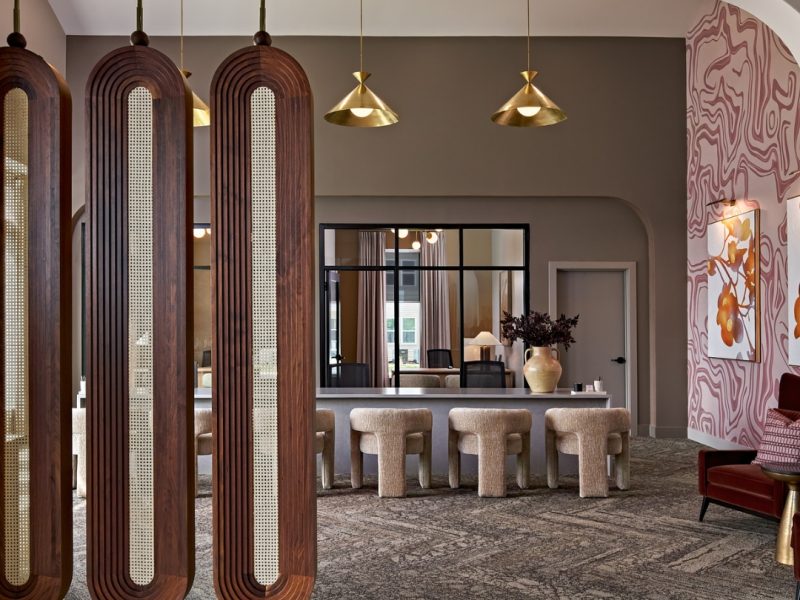
Pet features should never make a community feel kennel-like. The best designs fold them into the overall look rather than fencing them off. High-end finishes and biophilic elements can share a space with pet water stations and social areas when the palette and materials are chosen with intent.
Natural materials and a cohesive color scheme let a property stay polished while still being functional for animals. The visual language communicates that the community welcomes pet owners and pet-free residents equally. This is not a trade-off between pet friendliness and a comfortable, elevated feel. A well-designed property delivers both.
Policy, planning, and ADA considerations
Pet-friendly physical design only works when it aligns with management and maintenance policy. During the design planning process, the following elements should be built in rather than bolted on:
- Clear signage for where pets are and are not allowed
- Community rules covering quiet hours
- Outdoor waste stations to keep the property clean
- Pet-friendly features on ground-level units to accommodate potential service animals
- ADA compliance across all pet-related features and signage
- Pet-friendly landscaping, such as non-toxic plants and cooling artificial turf
Treating these as priorities that work with the physical design, not afterthoughts, is what keeps a pet-friendly community livable for everyone in it.
Designing for the future of pet ownership
Pet-focused properties should leave room to evolve as trends and resident priorities shift. That means anticipating growth in the pet population on site and changing owner expectations, including the move toward holistic pet health and wellness. Pet technology is advancing quickly, and features like RFID entry, pet access doors, and smart feeding and watering zones are becoming differentiators that pet owners actively seek out.
How SPI designs pet-friendly multi-family communities
SouthPark Interiors approaches pet-friendly design the way we approach every commercial project, from concept through installation. As commercial interior designers and interior architects working exclusively in multifamily and student housing, we integrate pet-focused finishes, amenities, and policy considerations into the design from the first boards through FF&E procurement and full installation. That end-to-end model is what sets us apart, and it means the pet features on a property are designed to perform, not merely to appear on a brochure.
Pet-friendly design is no longer optional. It is integral to keeping residents satisfied and protecting a property’s market value. Early collaboration among architects, developers, and property managers gives a project the best position to deliver a community that pet-owning renters seek out and stay in. To plan your next pet-friendly multi-family project, connect with SouthPark Interiors.